 Untourist Untourist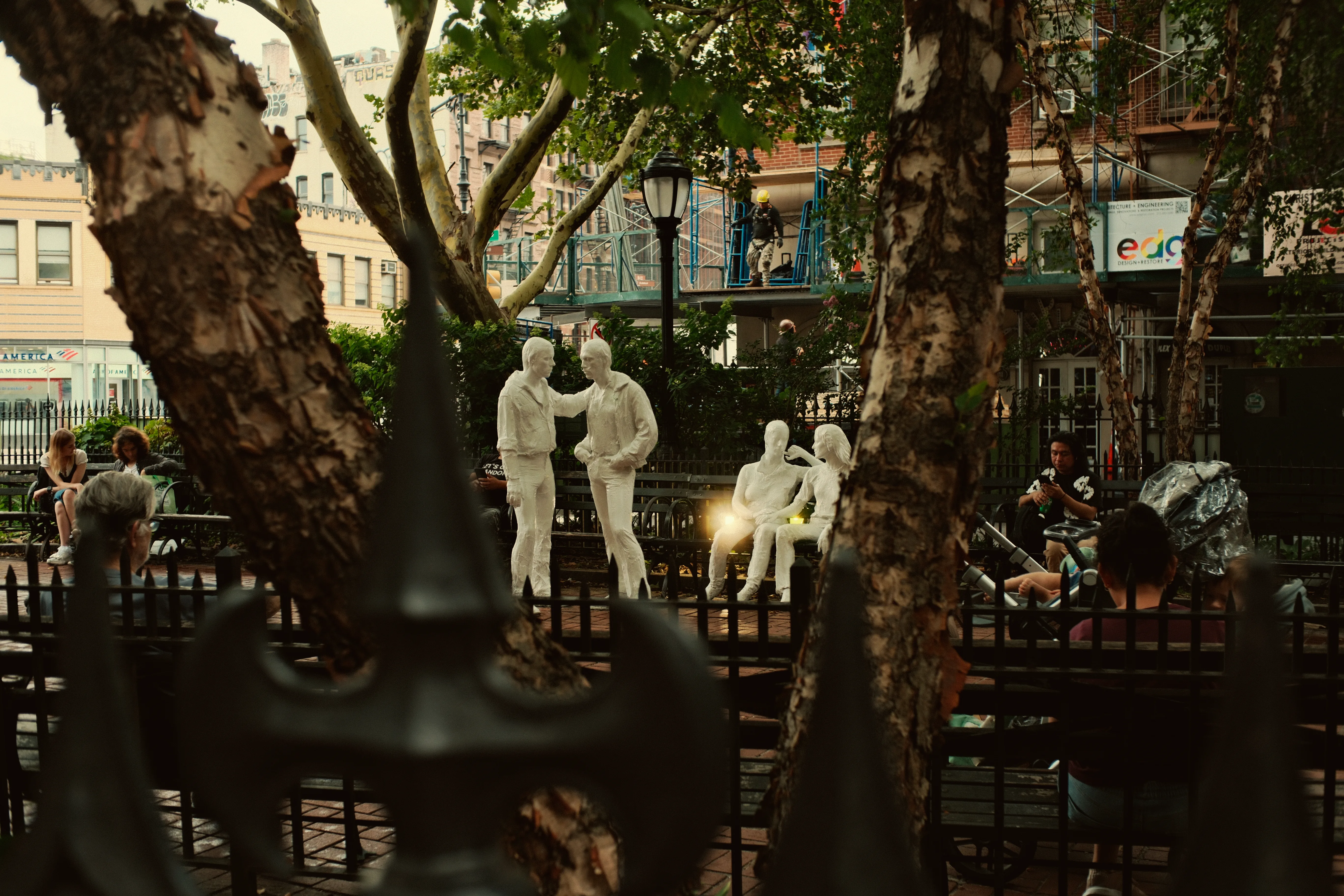
Greenwich Village is one of those New York neighborhoods that has been turned into a mood: old brick, crooked streets, music, theater, writers, protest, late nights, expensive apartments, ghosts of cheaper rooms.
But the more interesting story is not that the Village was charming. It is that, for a long time, it made room for people who did not fit easily somewhere else.
Artists, reformers, musicians, theater makers, students, activists, writers, and ordinary New Yorkers all found different reasons to treat the Village as a place where rules could bend. Not disappear. Bend.
That pattern of defiance is the thread behind Untourist’s upcoming Greenwich Village route.
Part of the Village’s power is physical. It does not feel like the rest of Manhattan’s grid. The streets turn, narrow, interrupt, and slip away from expectation. That irregularity matters because neighborhoods teach people how to move through them.
The Greenwich Village Historic District is often discussed through architecture and preservation, but the deeper point is texture. Small buildings, old rooms, mixed uses, public squares, tucked-away corners, and intimate streets created a setting where cultural life could happen at human scale.
The Village did not invent rebellion because the streets are charming. But the physical neighborhood helped give rebellion places to gather.
Washington Square is useful here not as a postcard, but as a stage. Public space turns private belief into something visible. Music, protest, performance, conversation, student life, and neighborhood ritual can all occupy the same ground.
The official NYC Parks page for Washington Square Park gives the civic frame. The lived frame is messier and more interesting: a park where the Village keeps testing what public life can hold.
That is one reason Greenwich Village history is hard to separate into neat categories. Art becomes politics. Religion becomes reform. Theater becomes argument. A street corner becomes memory.
The Village’s cultural history often depends on rooms that were not grand. Small theaters, basement music spaces, church halls, rented apartments, bookstores, and gathering spots gave people a place to try things before the rest of the city knew what to do with them.
Judson Memorial Church is one example of that overlap. Its history touches religion, social justice, art, and performance. Cherry Lane Theatre is another kind of example: a small stage with an outsized role in the neighborhood’s creative memory.
That is what makes the Village such a good subject for audio. The places do not always explain themselves from the sidewalk. The story is often in what the room allowed to happen.
Some of the most Village-like acts of defiance are small. A theater choosing risk. A church opening itself to public argument. A block preserving a scale that the city might otherwise erase. A person making work before there was a clear audience for it.
That quieter defiance is easy to miss if the neighborhood is treated only as a list of famous names. The Village was shaped by recognizable figures, yes, but also by a recurring habit: people using small spaces to test bigger possibilities.
In that sense, Greenwich Village did not only host counterculture. It rehearsed it.
Untourist’s upcoming Greenwich Village audio walk follows that pattern through real places: public space, reform spaces, performance rooms, side streets, and tiny acts of defiance that make the neighborhood feel larger than its footprint.
It is not meant to be a lecture or a checklist. It is meant to give the Village back some of its texture while you are there, with enough story to make the walk feel charged and enough room for the neighborhood to stay alive around you.
The Greenwich Village route is coming soon in Untourist. Until then, browse the upcoming NYC neighborhood walking tours, compare the self-guided walking tour format, or read the companion prelude to the Lower East Side immigrant history route.
Greenwich Village became associated with artists, writers, activists, musicians, theater makers, reformers, and people who challenged social convention in ways that shaped New York and American culture.
Its irregular streets, small rooms, old buildings, performance spaces, reform institutions, and public gathering places helped create a neighborhood where creative and political life could overlap.
The Greenwich Village route is in curation for Untourist. This Field Note is available now, and the app route will stay marked coming soon until it is ready.
Download Untourist to discover curated local walks, listen to narrated stops as you go, and stay oriented when you drift.